
The Wind and Songs Drift Together Toward God's Kingdom
Luna Tian
I’d like to take you into director Chen Dongnan’s documentary Singing in the Wilderness, into the daily life of Xiaoshuijing Village. Together with two young people from the village, let’s see how they attempt to find ways to continue singing amid faith, identity, and reality. You can search for Singing in the Wilderness on CathayPlay’s website to watch this film.
Part One: Introduction | Heavenly Voices from the Wilderness
Xiaoshuijing Village is located northeast of Kunming in Yunnan Province. Here, nearly all villagers are Christians. Faith has been passed down through generations. Hymns flow between the church and the fields—through them, villagers respond to life, to God, and to one another.
Founded in the early 1980s, the Xiaoshuijing Choir consists of over sixty Miao villagers. Without much professional training, they can sing multi-part a cappella harmonies with pure voices—like wind passing through valleys. People call it “the sound of heaven.”
Their songs traveled from the countryside into cities, into the National Centre for the Performing Arts, and onto the international stage. Beyond the applause, we also witness Xiaoshuijing gradually entering the tide of modernization—with the opening of roads came tourists. Today, they no longer sing solely to praise the Lord, but also for policies, media, and markets.
I’d like to take you into director Chen Dongnan’s documentary Singing in the Wilderness, into the daily life of Xiaoshuijing. Together with two young people from the village, let’s see how they attempt to find ways to continue singing amid faith, identity, and reality.
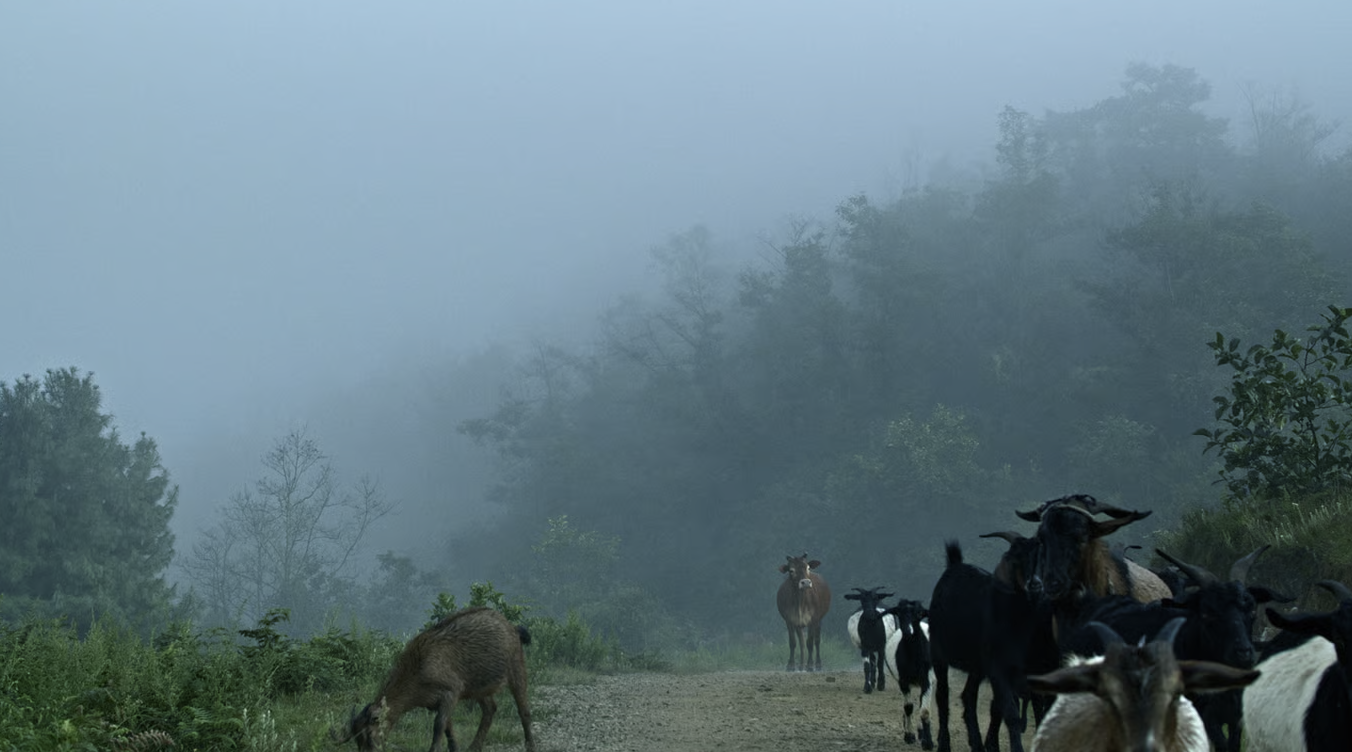
You can search for Singing in the Wilderness on CathayPlay’s website to watch this film.
Part Two: Prelude | “The Same Song”
I first encountered the Xiaoshuijing Choir in October 2017 in Beijing. I was in the audience at the closing ceremony of the Beijing Music Festival. As the lights illuminated the stage and the singers standing there, they sang “The Same Song.” When they reached the lyrics “the same feelings give us the same longing, the same joy gives us the same song,” I felt something particularly beautiful. At that time, I didn’t yet know that years later, their story would reappear in my life—returning as a documentary.
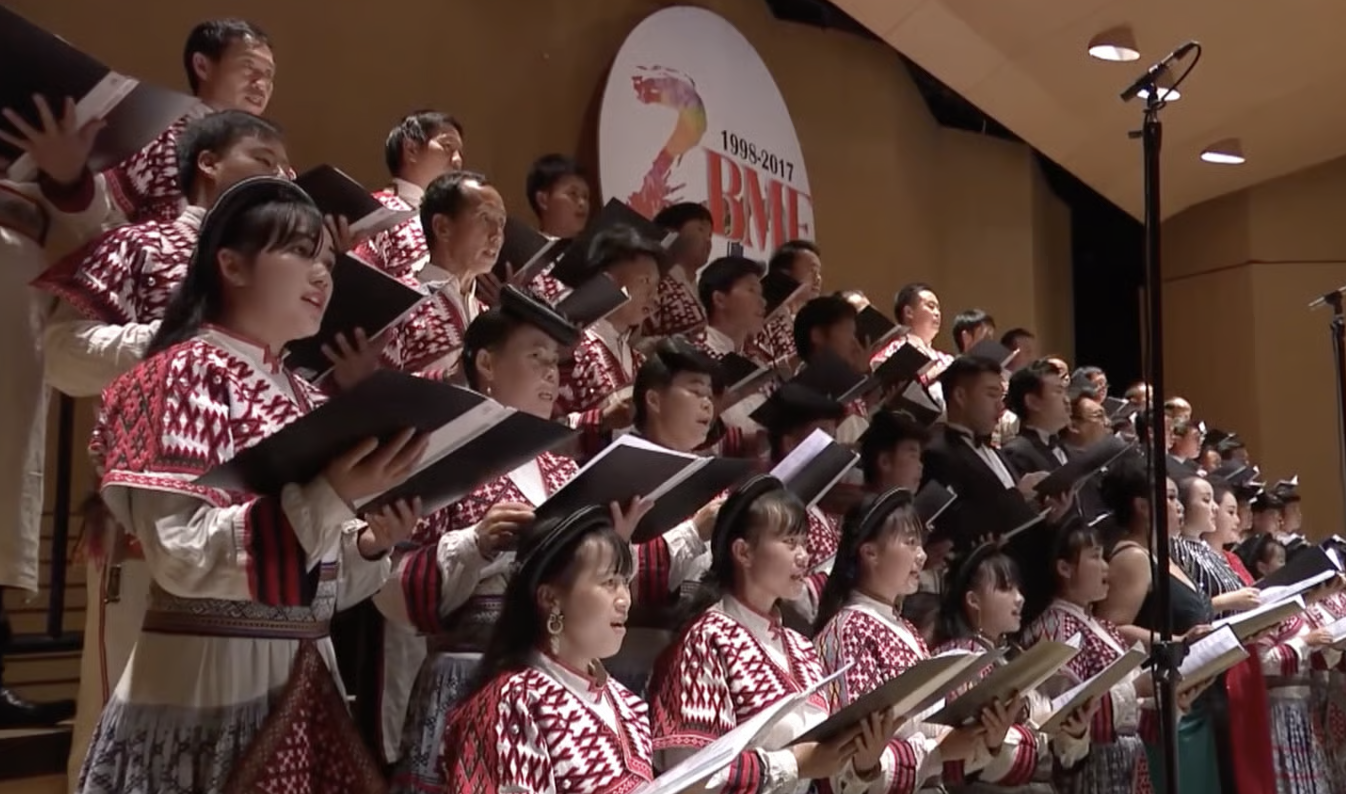
Watching Singing in the Wilderness was a particularly personal experience for me. I come from a small town, I’m Manchu, and I’m also a Christian. I too spent many beautiful moments in a choir—sunlight falling on the floor, quiet, warm, peaceful. Singing was always sacred, with no other purpose. We believed God would come to where there was singing. Sisters in the church shared stories and videos of the Xiaoshuijing Choir with us, and we all loved them.
As I grew older, I began writing journalism and watching documentaries regularly. Perhaps because of my own experiences, I paid special attention to films about religion and ethnic minorities. I often searched online for news about the Xiaoshuijing Choir—faith and song made me feel especially close to them, and I always wanted to know more about their lives.
In 2021, I saw a film called Singing in the Wilderness on the First Youth Film Festival website. I arranged with friends to watch it together in Xining, only to learn before the screening that the film had been canceled due to “technical reasons.” I felt regretful and very confused: why would a documentary about hymns and a mountain village be “unsuitable for screening”? Now I’m accustomed to such questions—years of journalism experience have shown me too many deleted stories. But I still believe people’s lives shouldn’t be sensitive, whether it’s faith or the way people sing for God—these things are beautiful.
I finally saw this film at the end of 2024. I had been waiting so long I’d almost forgotten about it. That day I happened to read an interview with director Chen Dongnan in CathayPlay’s Matters column, titled “If You Talk About God, You Must Also Have Ghosts”—that sentence immediately unlocked my sealed memories. I clicked the link and finally got my wish.
As the film opened, I seemed to hear “The Same Song” that had played at that music festival six years earlier. I thought perhaps the film’s director was also there that day, only we knew nothing of each other. Memories overlapped here, like echoes in a valley.
Part Three: When This Village Is Seen
Xiaoshuijing isn’t a particularly attention-grabbing place, despite having so many stories. Miao villagers have lived quietly on this land for generations, and participating in the choir is part of their daily life—they offer sacred songs to God. This is natural. Those four-part hymns grew slowly between labor, between the Bible and the soil, carrying the depth of faith. Until they were heard by the world.
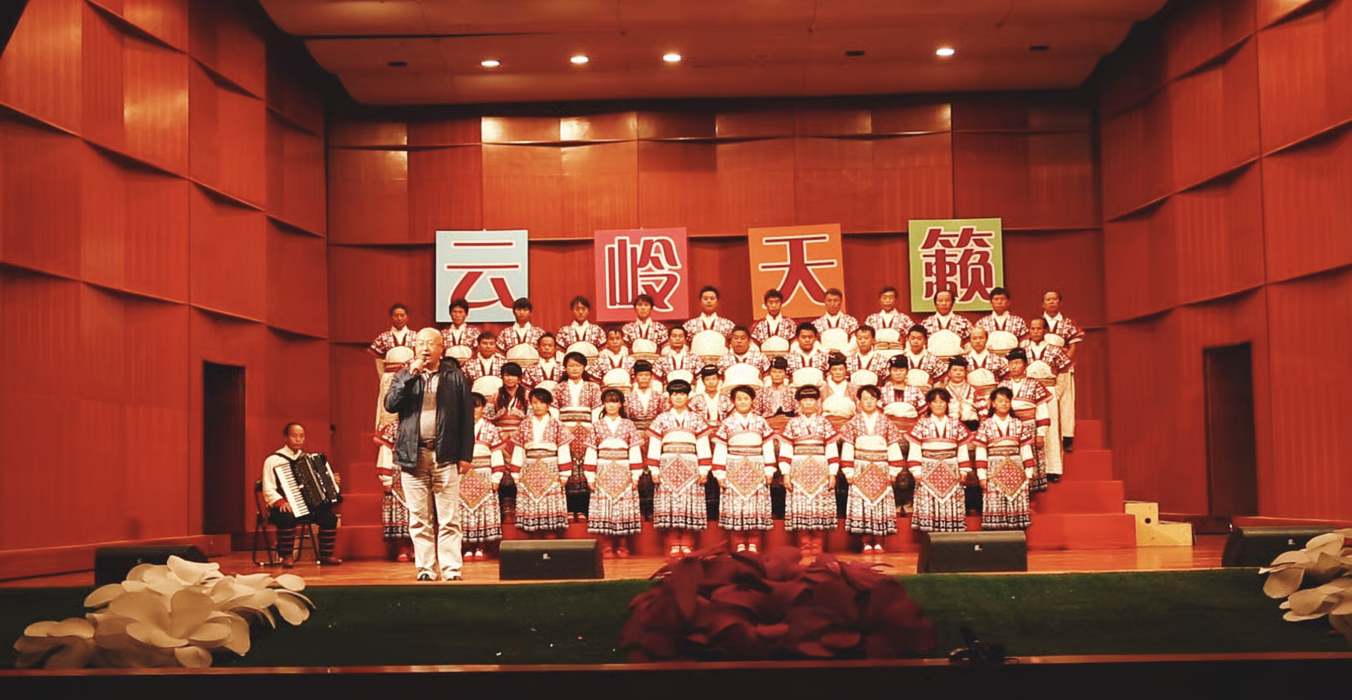
Initially, a cadre from the Cultural Bureau happened to hear these farmers singing Handel’s Messiah in Miao language. He was attracted by the beautiful sound, and perhaps also saw something that could be labeled a “resource.” From then on, the Xiaoshuijing Choir was no longer just a group that “sang for God”—they began leaving the village to participate in county mass choir competitions, unexpectedly winning first place. Over the next dozen years, they went from Kunming to Beijing’s National Centre for the Performing Arts, participating in the Spring Festival Gala, Central Conservatory performances, international folk song festivals, and even appearing on the stage of Mamma Mia—this choir of Miao people with only elementary education learned English songs using Miao phonetic annotations, yet sang them with touching accuracy.
This was glory, but also transformation. When villagers began learning to smile for cameras, learning to dress up, learning to “strive for high standards” during Beijing rehearsals, and when people talked about “hoping everyone won’t come to sing only when there are subsidies,” transformation happened. Everything began to have standards and evaluations, likes and dislikes, fans, and the risk of being praised or removed. We see the need to be more refined and politically correct, more “spreadable.” Even songs had to be rearranged: not too much religious content, no sensitive words, learn foreign songs, and “if singing in a foreign language, work through it sentence by sentence.”
The unique Xiaoshuijing Village was also experiencing a typical Chinese-style modernization narrative transformation.
Director Chen Dongnan doesn’t emphasize this transformation in the film, but it’s always present. In the footage, villagers practice songs, give interviews, cooperate with filming, and learn to say “appropriate things.” For those unwilling to be interviewed, a “sayable” language system is designed. “He won’t say what you want him to say… but if you design it for him, he can cooperate,” says a platform manager.
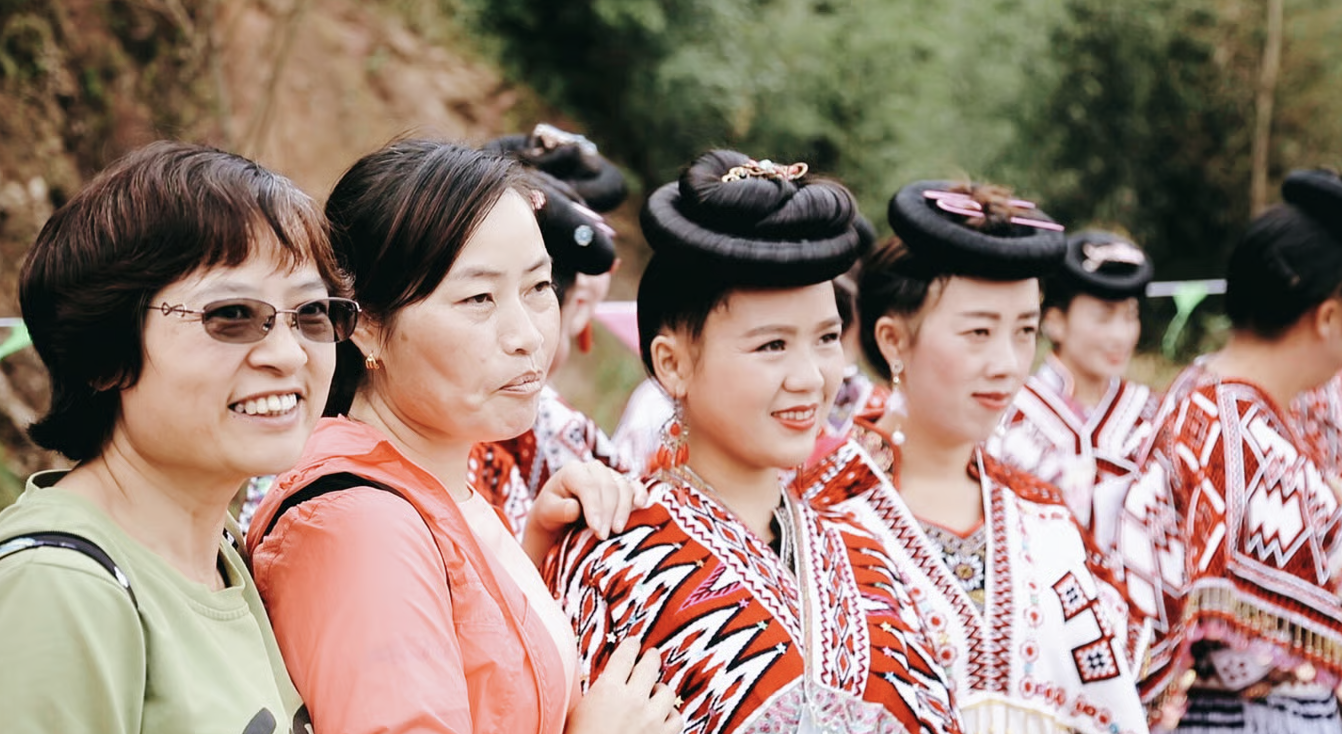
I watch again and again, trying to understand and imagine such a story: songs that originally belonged to the wilderness are absorbed by platforms, pushed onto the world stage—tearful audiences, enthusiastic leaders on stage, Xiaoshuijing people learning to make the world like them. Xiaoshuijing entered modern society, and songs dedicated to God became songs dedicated to audiences—to be heard by policies, by share counts and likes. They know what can be said and what cannot; what can be sung and what must remain silent. They even got their own public account, except “some things can’t be touched there”—too much religion violates regulations. That account stopped updating in 2021.
This boundary between “sayable” and “unsayable” is the film’s most silent part. The Xiaoshuijing Choir never actively sought this exposure and applause, but neither did they choose to refuse it. Because in their reality, singing isn’t just spiritual praise—it gradually became a “resource” that could be exchanged for economic improvement, for supporting families.
They left the wilderness, but also lost part of the wilderness’s purity.
Yet whenever night falls and lights go out, the choir’s older members still walk across muddy ground toward the church, wearing soil-covered rubber shoes, singing those hymns—“Christ Is Victorious,” “Jesus, Hope of Humanity,” “Fragrant Praise”—the opened hymnals containing both Chinese and Miao text. They sing slowly and seriously. Just as they have for many years.
So I know their songs are still sung for God.
Part Four: The Pull of Reality
“If I say, ‘I will not mention him or speak any more in his name,’ his word is in my heart like a fire, a fire shut up in my bones. I am weary of holding it in; indeed, I cannot.” —Jeremiah 20:9
Jiansheng in the documentary is a very quiet person. Somehow, he always reminds me of Jeremiah from the Old Testament. That “weeping prophet.”
Jiansheng doesn’t speak much, always smiling, but his gaze is like wind, drifting into the distance from time to time. He herds sheep in the village and sings hymns in church, occasionally writing in his journal—every sentence has the power to move people. At the film’s beginning, he’s the one who reads the Bible while herding sheep, the one who says he wants to become a missionary. His voice is soft but sincere. I believe he’s someone who “could live only for God.”
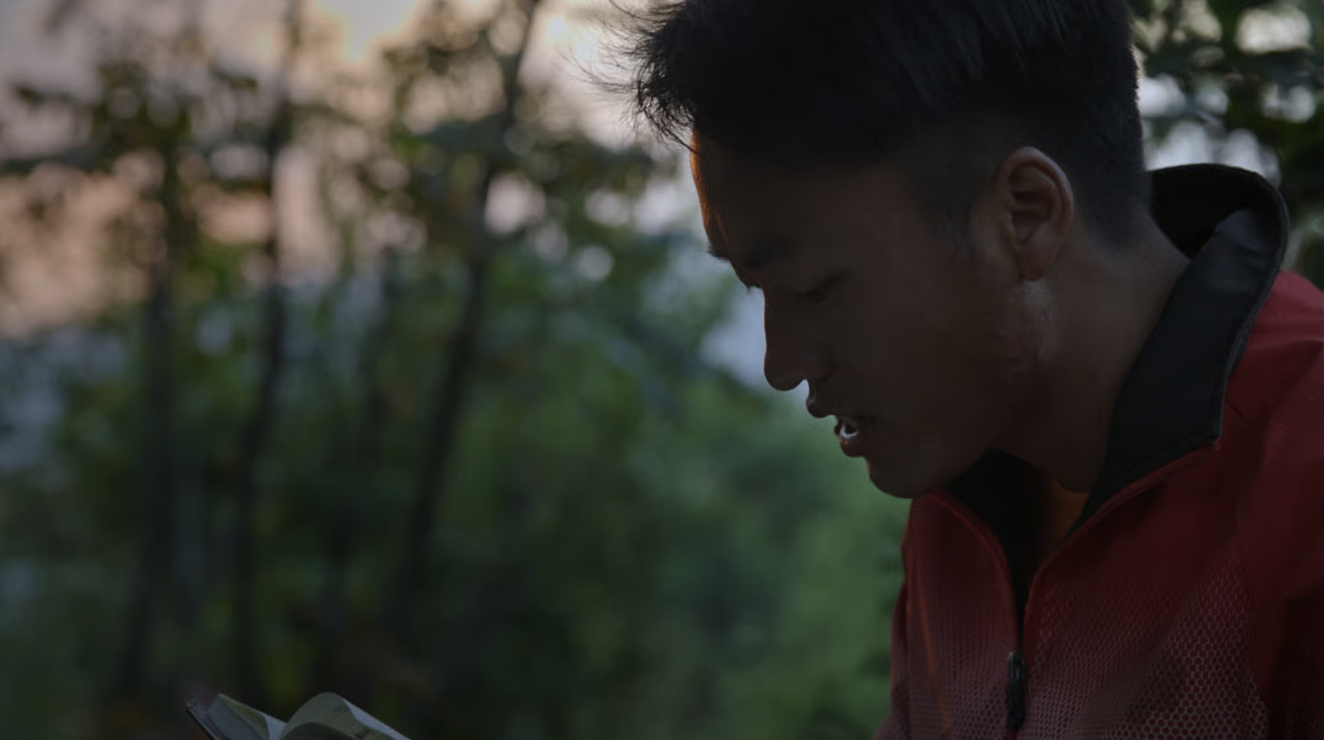
But reality is a constantly advancing wall.
So many trivial, heavy things happen one after another: marriage, family, the village’s gaze, his wife’s expectations, a house not yet built. Jiansheng perhaps wanted to preserve his own way of living, not wanting to sink into materialism. But in the end, he still built that house.
I think for a person of faith, this is the most difficult trial. I watch him move toward silence, beginning to avoid the camera. He writes in his journal: “A person going against the current will be crushed by all worldly affairs.” I see him compromise in exhaustion. He still loves his wife and still fears God. He begins smiling again, cooperating with village activities, rehearsing hard before performances, accepting applause on stage. He still sings, but remains silent. He writes in his journal: “I will also go with the flow, for the sake of harmony.”
That’s his way—keeping alive a spark of faith while also preserving his marriage and dignity. He chooses to live, to become “an understandable husband” rather than “an ever-inconvenient idealist.”
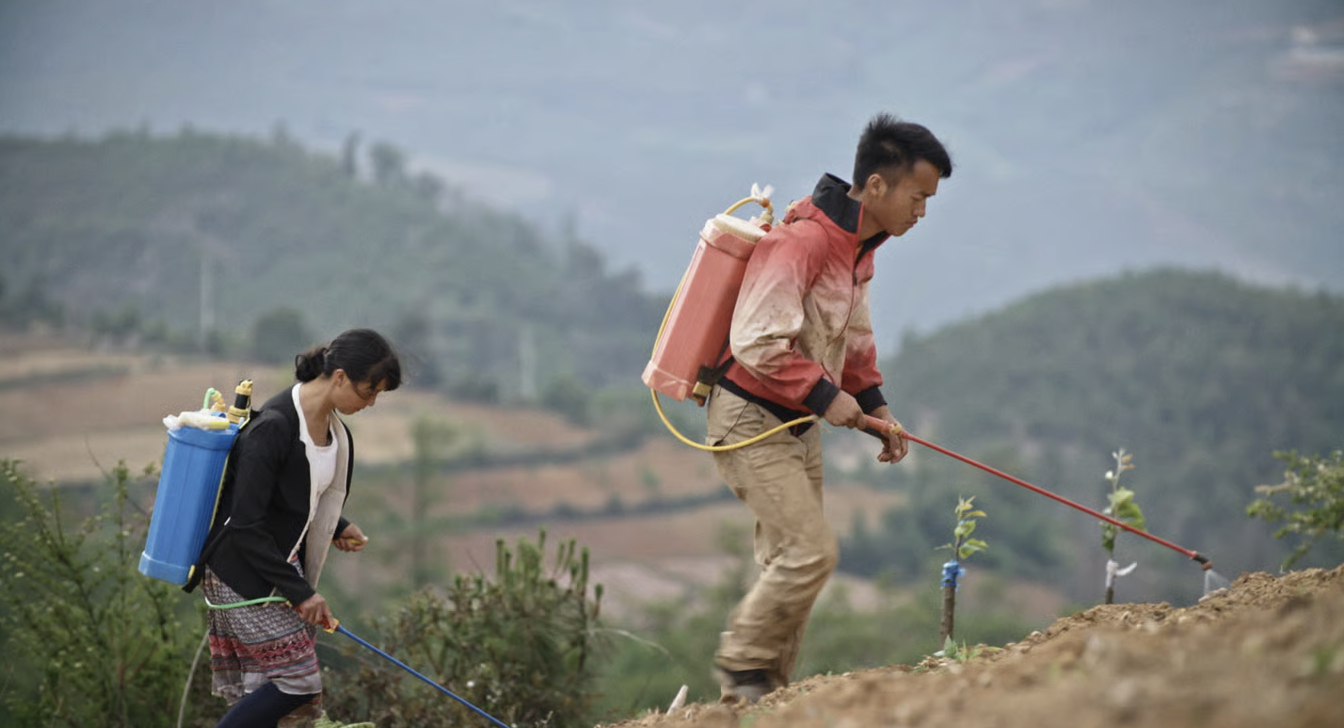
I suddenly think of words from Jeremiah—“If I say, ‘I will not mention him or speak any more in his name,’ his word is in my heart like a fire, a fire shut up in my bones. I am weary of holding it in; indeed, I cannot.”
Jiansheng isn’t that intense, but I always feel his silence is actually another way of speaking. He simply chooses to respond with lingering echoes.
Even so, we can still see his hesitation and pain in the film. For instance, he nearly gave up on life. In another scene, he sits in his clean new house, his wife watching TV while he lies on his side sleeping—that frame is so quiet it’s almost suffocating. I always feel that isn’t a settled life, but rather a daily existence exchanged for his entire faith and ideals.
Perhaps, as he himself wrote: “I don’t know what kind of person I will become after time’s trials. But for the future path, I look to God.”
Jiansheng doesn’t protest or explain; he simply slowly retreats, as if withdrawing into a wilderness time between himself and God, refusing to let faith become performative.
“Hallelujah is not for you to hear—there’s a voice in my heart, I’m talking to Him.”
When Yaping first appears, I only thought she was a particularly beautiful young woman—confident, loves beauty, likes to dress up, very warm, always serious when singing. But in the latter half of Singing in the Wilderness, she gradually becomes a name I find especially unforgettable.
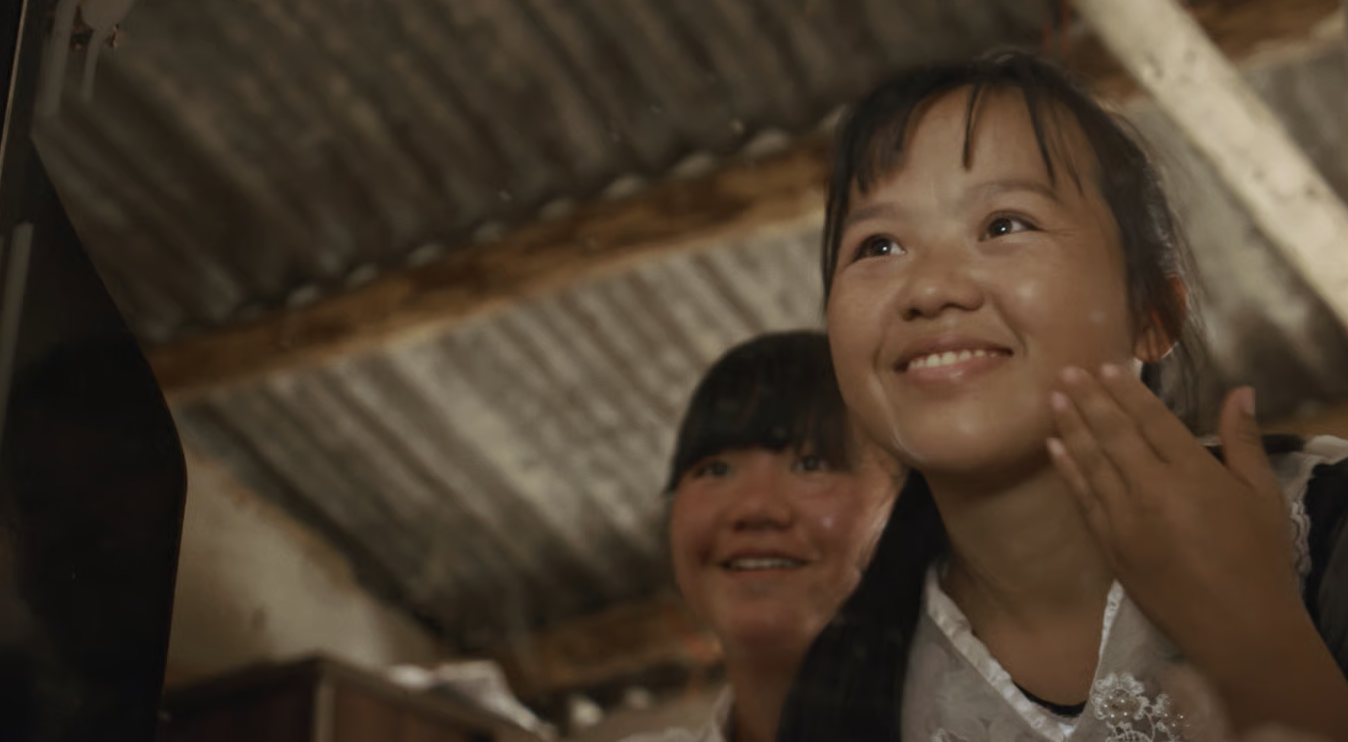
There’s a blurry but moving old video in the film, recording Yaping’s wedding day. Before marriage, Yaping was a core member of the choir—bright voice, stable breath, one of the sisters everyone thought sang best. In the video she wears red clothes, her expression complex—both joyful and uneasy. The wedding was simply held in the church, with banners hanging on the wall, the atmosphere below somewhat silent. Conductor Long said, “A core member is marrying out, we feel it’s a pity.” These words were straightforward, and spoke to the fate of women in the village. Marriage isn’t just the next station in life—it often means leaving, silence, and interruption.
The groom was from another village, reportedly not deep in faith, more going through the motions following family wishes. That night, someone prayed for Yaping in church: “Lord, the groom arrived here tonight and will take the bride away tomorrow. May she bear witness to the Lord’s gospel in the new village.”
Yaping named her child Little Paul and taught the child to sing hallelujah. But her husband doesn’t believe in God. In the film, we see Yaping’s husband doesn’t support her singing or teaching singing. When she went to teach others to sing, her husband called repeatedly, and later even hit her in front of others.
Later, Yaping secretly ran back to her hometown to chat with her sisters, and the footage becomes relaxed again. In the film’s final scene, Yaping happily dances on the mountain, wearing a beautiful new dress, as if walking toward freedom. But we don’t know how future days will be. Without sufficient resources, people ultimately must compromise with reality—this is what worries me most.

In later interviews I read, Yaping’s departure didn’t receive family support. Although she had already planned out her life after divorce, her husband persuaded her back through her father. Yaping later had a second child and went to work in the county town. Only occasionally, when there are activities, does she go to her husband’s village to train people, singing festive red songs.
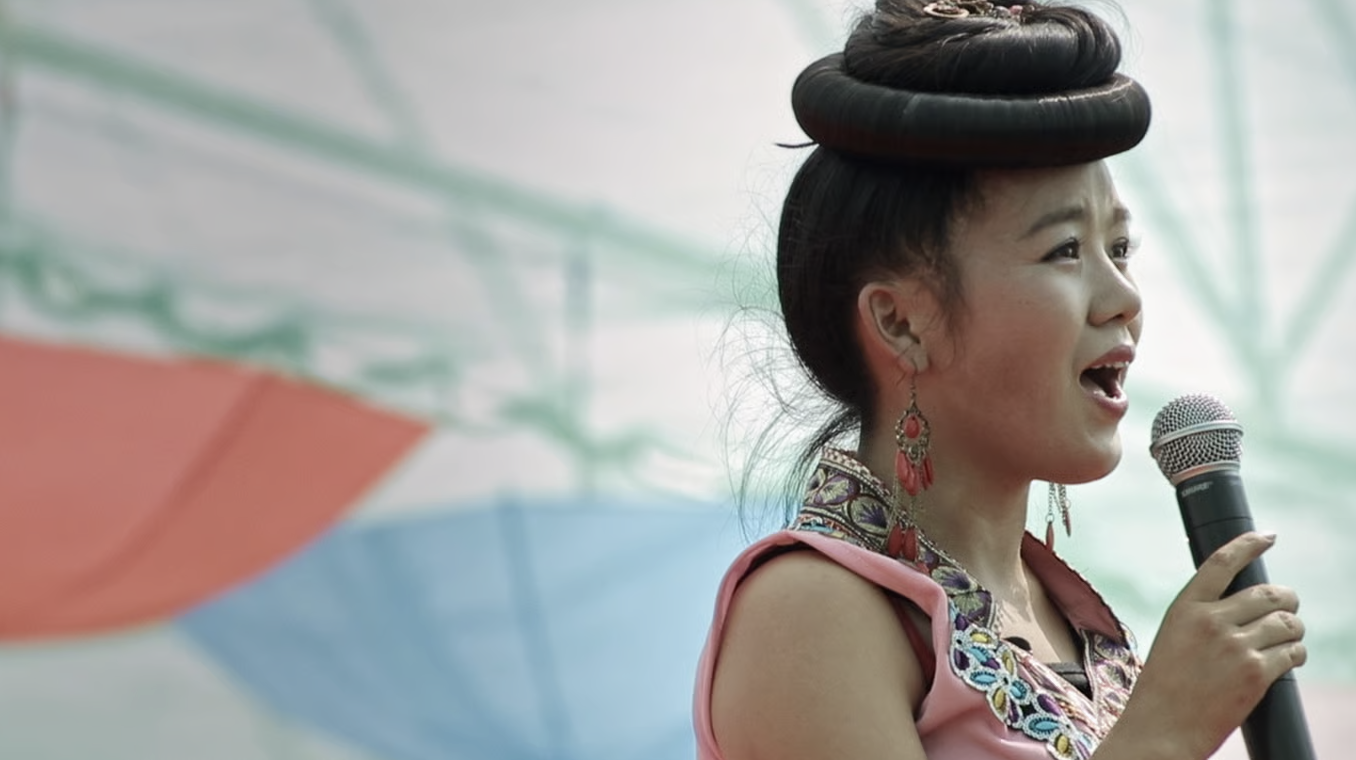
I feel especially heartbroken for Yaping and Jiansheng. I always feel they shouldn’t live like this, but for them, many difficult-to-solve problems lie ahead. I believe every person of faith won’t easily abandon their faith. Everyone may compromise when facing problems, but perhaps when they sing—no matter what they sing—they’ll be happy.
Part Five: Between Poetry and Documentation
Singing in the Wilderness is a very restrained film.
As a documentary, it tells several particularly moving stories—I see stories of ideals versus survival, self-realization, ethnicity and religion, marriage and family. What it expresses is definitely not merely the changes of a choir in a remote village—I find it hard to narrate its story in simple language because it’s too rich and complex. To truly understand it, one must watch carefully. The film itself isn’t long, just 90 minutes.
From a technical perspective, this film may not be an absolutely perfect work, but it’s already quite mature—I like its narrative that doesn’t rush to give commentary. The footage isn’t overly sentimental; the editing and sound design carry a restrained sense of distance—the director doesn’t forcefully intervene or impose views, nor guide the audience toward specific values.
Many shots in the film are very aesthetic, with sophisticated composition and mature technique. Some close-ups always capture my heart—like the soil on the hands of the accordion player. The cinematography and editing choices are very clean. But these images don’t seal the subjects within specific labels—they’re neither symbols of suffering nor exotic curiosities for others to gawk at, but rather vivid individuals with their own thoughts and lives.
This restraint is reflected in the music and editing. We can feel that the underlying score sometimes spreads atmosphere with overtones, sometimes quietly exits between long shots, not interfering with audience emotions or actively constructing drama. From my personal perspective, I really like this way of clearly showing the folds and silences of real life.
The editing can be called the soul of this film. As someone who has also worked in the film and television industry, I know the amount of footage for this film must be very large—a considerable test for the director, editor, and post-production workers. The film successfully allows several main characters to naturally emerge from the group portrait rather than being forcefully “selected.” It leads us to witness their daily lives and subtle changes. Though there’s no clear main line or heroic progression, it can delicately capture the fluctuations of life’s rhythm: whether it’s Jiansheng’s contradictions, Yaping’s marriage, or the ambiguous tension between director and villagers—all seep into the audience’s heart like flowing streams.
However, I always feel that between narrative force and character depth, there may still be room to explore. The film dedicates considerable footage to depicting collective experiences (like the choir going north, performances, returning home), leaving somewhat less for the character stories themselves. But perhaps Singing in the Wilderness‘s focus wasn’t there to begin with. It creates a very good overall atmosphere, expresses many complex things, and gives people a glimpse into Xiaoshuijing Village—this is not easy.
I think of Yaping’s story. In the film, she goes from being an enthusiastic core choir member to entering a marriage full of conflict and unease. But this thread isn’t further explored in the film. We learn she married, suffered, gave birth, but lack more background to truly understand the forces behind her choices and silence. To some degree, this precisely reflects the director’s caution and hesitation in handling “personal stories”: she respects the subjects’ privacy and boundaries, but also thereby misses opportunities to further touch the audience.
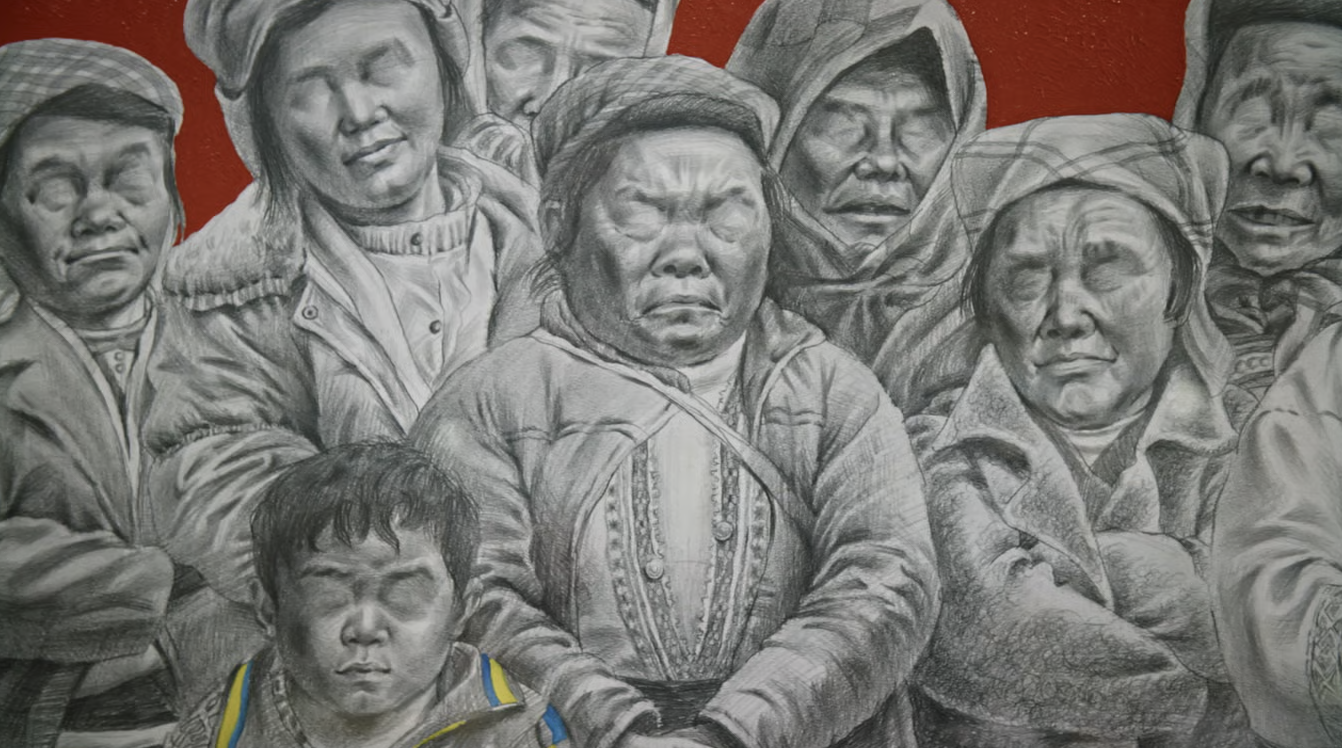
I saw a comment saying that the characters in this film are all surrounded by various forms of “being watched”: watched by villagers, by government, by the director, by us. But the real them always remain hidden where cameras don’t reach. Like the works of that bald painter, each person with eyes closed, painted calmly and vaguely. Eyes are no longer windows to the soul, but rather an exit that’s protected and also concealed.
Perhaps this is the final question the film leaves us: in such watching, who truly sees whom? And can the director, within such distance, see herself?
Singing in the Wilderness ultimately doesn’t provide answers. Its poetry and restraint are like morning mist—may not quench thirst, but sufficiently nourishing. It makes us realize that even with the most refined camera techniques and complete narratives, we may still be unable to fully reach the core of that village and those people.
But so what? Perhaps it’s precisely this “unreachability” that makes documentary’s gaze no longer a form of possession, but rather a prayer-like approach.